Understanding HOA Communications: What They Mean (and Why They Matter)

If you live in a community managed by an HOA, you’ve likely received different types of communications over time—some informational, some corrective, and some that may feel a bit… uncomfortable. Let’s clear the air.
Not every message from your HOA or management company means you’re “in trouble.” In fact, most communications exist to keep everyone informed, aligned, and protected. And when something does require correction, the goal is not to single anyone out—it’s to maintain the standards that protect your property value and quality of life.
Here’s a simple breakdown of the most common types of HOA communications and what they actually mean.
1. Board of Directors (BOD) Communication
Think of this as leadership-level communication.
These messages come directly from your HOA Board and typically address:
Policy changes
Community decisions
Budget updates or assessments
Major projects or initiatives
Tone: Official, informative, and community-widePurpose: Transparency and governance
👉 What it means for you:You’re being kept in the loop about decisions that impact the entire community—not being singled out.
2. Bulletins
Bulletins are your HOA’s version of a community newsletter.
They might include:
Upcoming events
Seasonal reminders (pool openings, snow removal, landscaping schedules)
General updates
Tone: Informational and broadPurpose: Keep everyone aware of what’s happening
👉 What it means for you:Nothing to worry about—this is simply helpful information to keep your household running smoothly within the community.
3. Friendly Reminders
This is where things get a little more personal—but still very low-stakes.
Friendly reminders are often sent when:
A rule is commonly overlooked
A seasonal guideline needs attention (trash cans, decorations, parking habits)
The HOA wants to correct behavior before it becomes a formal issue
Tone: Light, courteous, and preventativePurpose: Help residents stay in compliance without escalation
👉 What it means for you:You may not even be the only one receiving it. These are often sent in batches or community-wide. It’s a nudge—not a penalty.
4. Notice of Violation
This is the one no one loves—but it’s also the most misunderstood.
A Notice of Violation is issued when:
A specific rule in the governing documents has not been followed
A previous reminder may not have been addressed
The HOA is required to formally document non-compliance
Tone: Direct, factual, and professionalPurpose: Document and correct a specific issue
👉 What it means for you:This is not personal. It’s procedural.
HOA Boards have a legal responsibility to enforce the community’s covenants consistently. If they don’t, it can lead to bigger issues—selective enforcement claims, declining standards, and even legal exposure.
Why It Comes from a Management Company (and Not Your Neighbor)
One of the most important roles of a professional management company like Onyx Capital Management is to act as a neutral third party.
That means:
No emotional delivery
No neighbor-to-neighbor tension
No inconsistency in enforcement
Instead, you get:✔ Clear documentation✔ Professional tone✔ Fair and consistent application of rules
This separation is intentional—and beneficial.
Because let’s be honest: it’s much easier to receive a structured, objective notice from a management company than to feel like a neighbor—or board member—is personally calling you out.
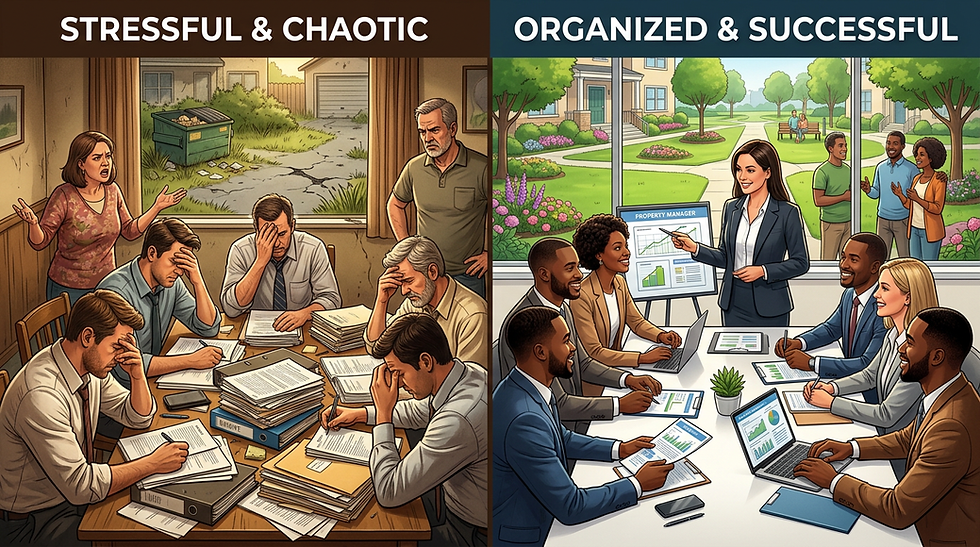
Let’s Reframe the Narrative
It’s human nature to feel defensive when receiving a correction. No one enjoys being told they’ve made a mistake.
But in an HOA community, compliance isn’t about perfection—it’s about consistency.
When rules are followed:
Property values are protected
The community looks and functions better
Everyone benefits equally
And when something falls out of compliance, addressing it promptly keeps small issues from becoming larger ones.
Final Thought
If you ever receive a reminder or violation notice, take a breath—and take a look.
More often than not, it’s a simple fix.
And behind that message isn’t a personal judgment—it’s a structured system designed to keep your community running smoothly, fairly, and professionally.


Comments